



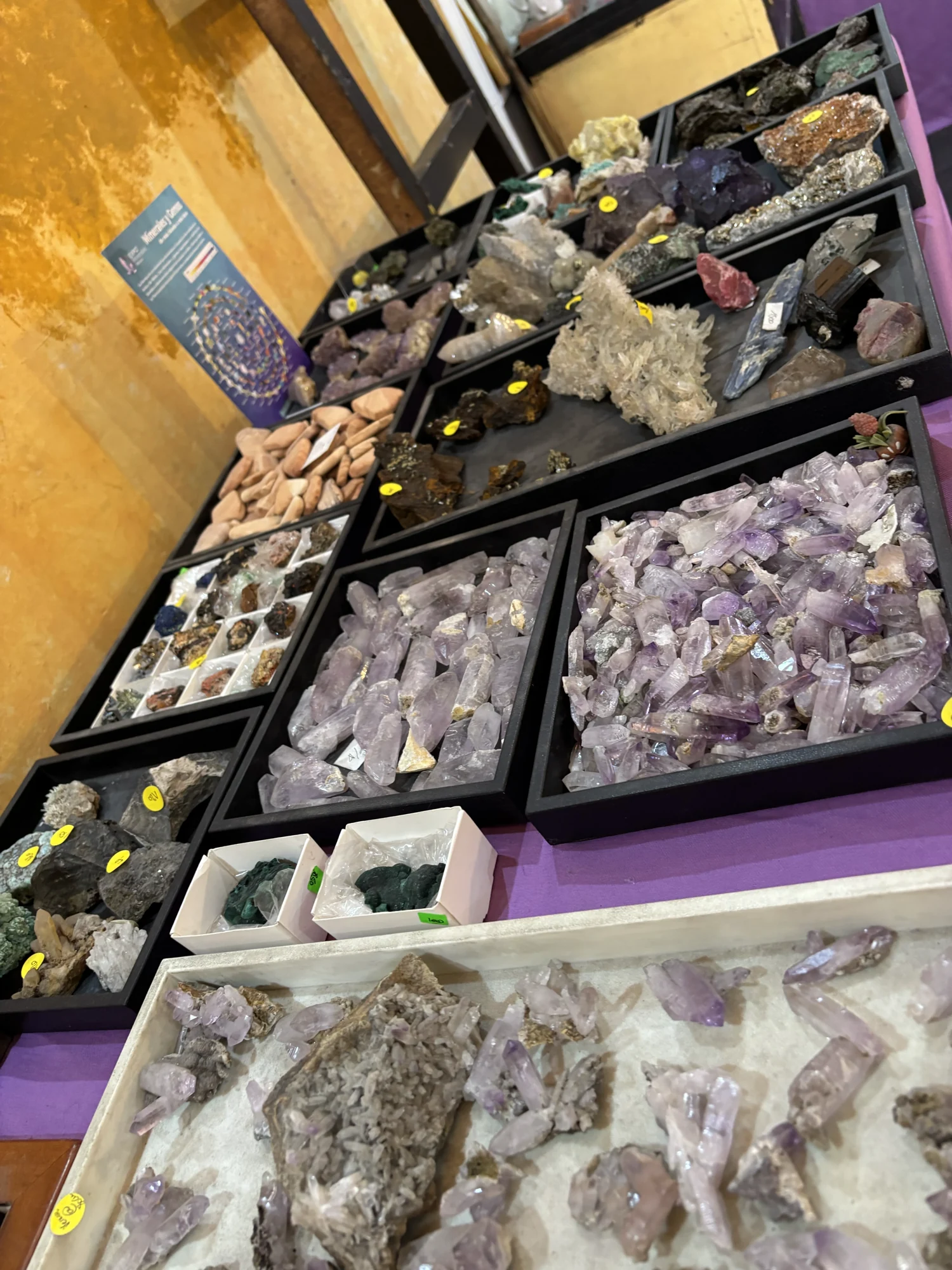

The first shop was hidden at the back of a courtyard. A woman lifted a plastic tub onto the counter and poured out several hundred stones. I put both hands in before remembering to ask permission. Raw emeralds slipped beneath my palms while rough pieces caught against my rings. The contrast of something so precious falling through my fingers in abundance was mesmerizing. It felt like I had stumbled upon hidden pirate treasure.
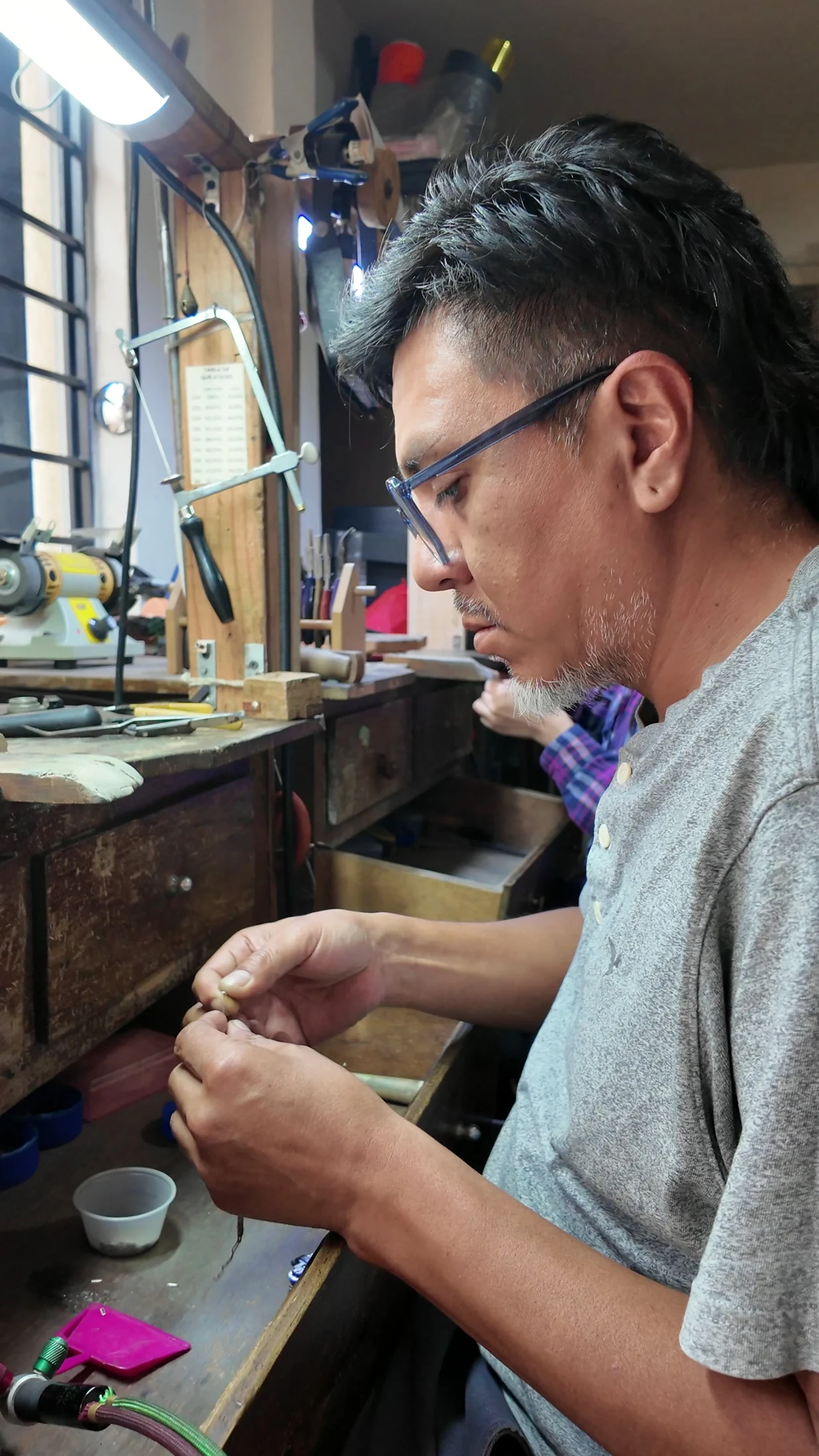
This is what gem shopping in Centro Histórico feels like. Every doorway might conceal another staircase or another room crowded with minerals, silver, chains and tools. Outside, vendors, delivery carts and pedestrians compete for space. The area is overwhelming, abundant and gloriously chaotic.
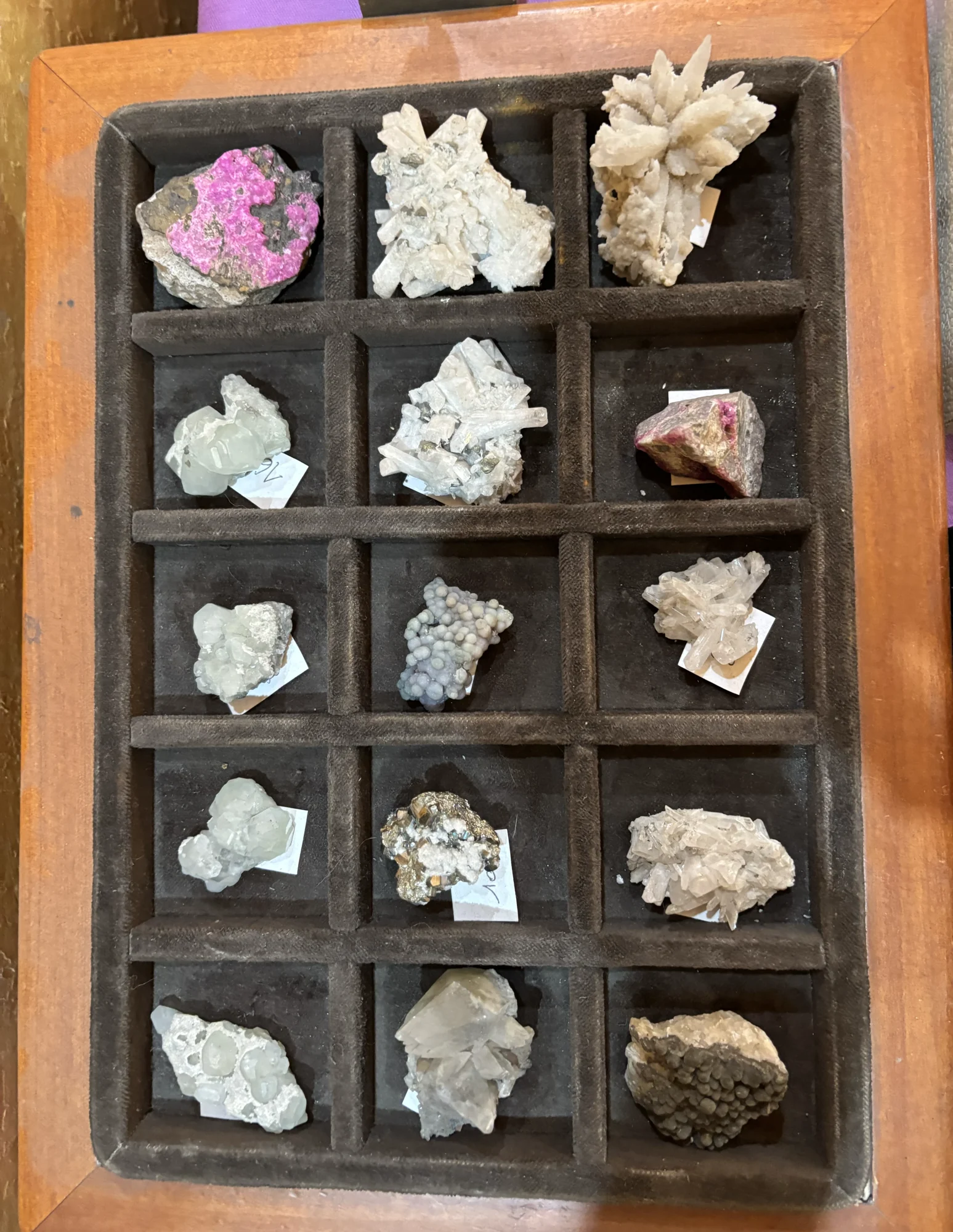
I had come looking for one stone for a SERGIO STUDIO object, but the search gradually became connected to the place. Only a few blocks away are the remains of Mexico-Tenochtitlan, the powerful lake city whose ceremonial centre organized religion, politics and the cosmos. Greenstone, obsidian, shell and metal were not merely decorative. They carried status, sacred meaning and relationships with water, fertility, life and the gods.
The modern shops do not stand precisely over the Templo Mayor, and there is no documented, uninterrupted tradition connecting their dealers with Mexica lapidaries. I find the proximity itself remarkably fitting. A city once filled with offerings, precious materials and spiritual power was devastated by genocidal conquest, yet the surrounding streets are again crowded with stone, metal, exchange and human desire.
I sometimes wonder whether some of that energy remained. Archaeology cannot answer this, and I would never present it as science. I can only describe my experience: certain places seem to retain an atmosphere created by everything that has happened there. This part of Mexico City still feels charged.
Back in the courtyard, I continue moving my hands through the stones. I am searching for one, but the pleasure lies in not knowing where it is yet.